|
Quick Answer: Are e-bikes legal in Australia in 2026? Yes. A legal e-bike in Australia is an EPAC with a 250W continuous motor that cuts assistance at 25 km/h. The throttle works only as a walk-assist up to 6 km/h. The bike must have functional pedals and EN 15194 certification. No licence, registration or insurance is required for a compliant 250W e-bike. |
Australian e-bike laws have shifted faster in the past 18 months than at any point since the EPAC legal definition arrived in 2012. The NSW government reversed its 500-watt allowance. The federal government has tightened power and speed limits at the border. Queensland has a sweeping new bill before parliament. Police gain powers to seize and destroy non compliant devices on the spot.
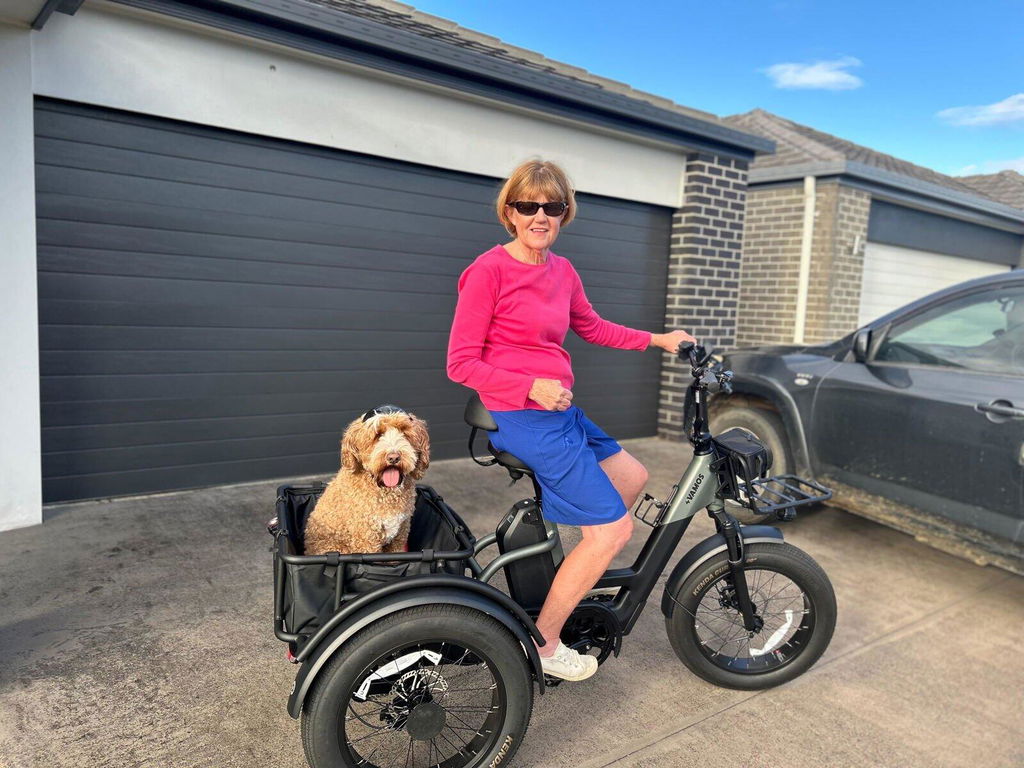
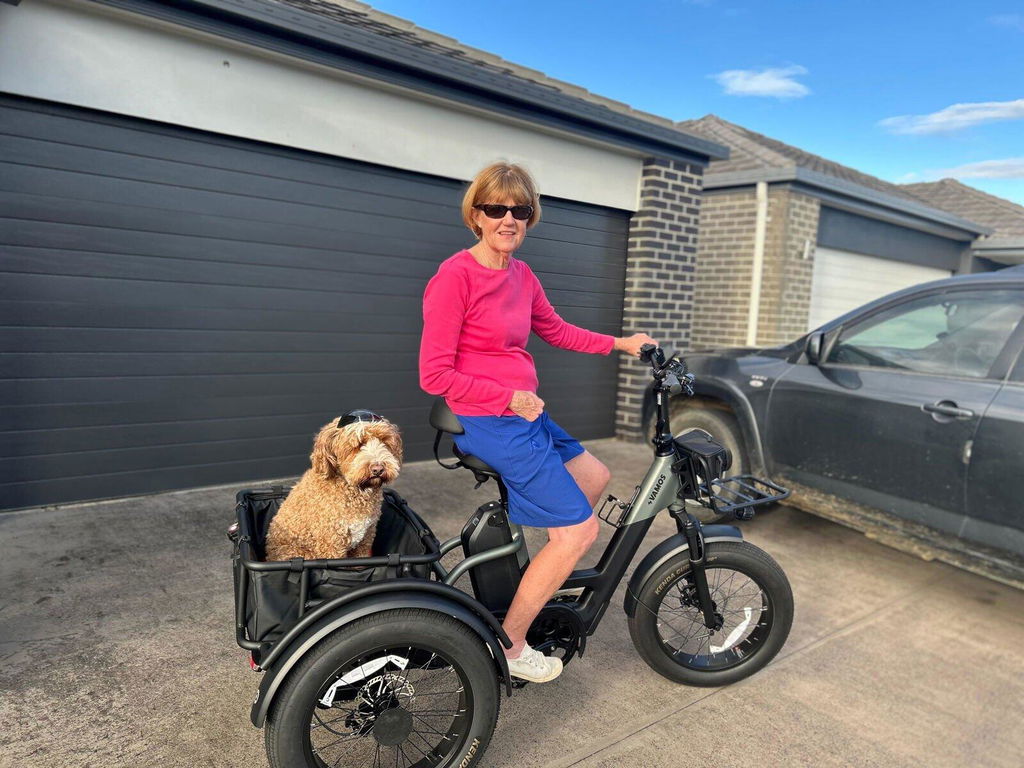
At Vamos Bikes, we have built the Amigo to meet the 250W national standard so you can ride legally anywhere in Australia. This guide walks you through what counts as a legal ebike in 2026, the rules in your state and how the Amigo fits in for road users from NSW to the Australian Capital Territory.
Key Takeaways
- 250W is the national standard. Every state caps legal e-bikes at 250W continuous power. Motor assistance must end at 25 km/h.
- NSW returned to 250W on 1 March 2026. Existing 500W owners have a grace period until 1 March 2029. New 500W bikes can no longer be sold for road use.
- Federal import ban is active. Since 24 December 2025, only EN 15194:2017 (or later) certified e-bikes clear customs.
- Police can seize and destroy illegal bikes. NSW, WA and Queensland have powers to confiscate non-compliant e-bikes on the spot.
- Queensland reforms pending. Riders may need a learner’s licence to ride an e-bike from 1 July 2026 if the bill passes.
The Big 2026 Changes You Need to Know
Three major shifts have reshaped Australian e-bike laws this year.
- NSW returned to 250 watts. From 1 March 2026, the NSW government dropped its 500-watt allowance and brought NSW into line with the rest of the country at 250 watts continuous rated power. Owners who bought a compliant 500W bike before that date can keep riding it until 1 March 2029.
- Federal import ban. Since 24 December 2025, the Commonwealth requires EN 15194:2017 (or later) for all imported electric bikes. The rule blocks high-powered e-bikes and unsafe devices at the border before they reach the Australian market.
- Seizure powers expanded. Police in NSW, WA and Queensland gain powers to confiscate and in some cases destroy electric motorbikes posing as ebikes. NSW has trialled portable “dyno” units that measure the maximum motor output and speed cut-off on the roadside.
What Counts as a Legal E-Bike in Australia
Australia recognises one type of road-legal electric bike. The legal definition is the Electrically Power-Assisted Cycle or EPAC, often called a pedelec or a pedal assist ebike. If your bike meets the EPAC standard, it is legally classified as a bicycle. No registration, no driver’s licence and no compulsory third-party insurance are needed.
To be a legal e-bike under the Australian Design Rules and the EN 15194 safety standards, your bike must have:
- A maximum continuous power output of 250 watts (the combined maximum power output of the electric motor)
- An electric motor that provides assistance only while you pedal
- Motor assistance (also called pedal assistance) that reduces as speed climbs above 6 km/h
- A motor that cuts out at 25 km/h
- A motor that stops when you stop pedalling
- A throttle that works only as a walk-assist up to 6 km/h
- No internal combustion engine of any kind
- Functional pedals you could ride with the motor switched off
The 250W figure refers to continuous rated power, not peak output. A genuine EN 15194 motor can briefly spike higher on a steep climb without breaking the law. What is illegal is a higher-powered motor that has been software-locked to 250W and can be unlocked later. The legal definition keeps power and speed limits consistent across every state and territory.
Legal E-Bikes vs Illegal Devices
Many fat-tyre bikes and DIY kits sold online claim 750W or even 1,000W output. These are not legal ebikes in Australia. The law looks at the motor’s marked rating on the hardware, not a software setting. A 1,000W bike “limited to 250W” is still a motor vehicle in the eyes of the law.
E bike modifications that push output beyond 250W move the vehicle into electric motorbike or moped territory. Riding a modified bike on a public road means you are operating an unregistered vehicle without a driver’s licence or CTP insurance. This is true even if you keep the speed under 25 km/h.
Here is how the law sees different electric vehicles.
|
Vehicle |
Pedals |
Max Power |
Max Speed |
Registration |
Licence |
|
Legal e-bike (EPAC) |
Yes |
250W |
25 km/h |
No |
No |
|
Electric scooter |
No |
Varies |
25 km/h |
No |
No |
|
Electric moped |
No |
Any |
50 km/h |
Yes |
Moped class |
|
Electric motorcycle |
No |
Any |
50+ km/h |
Yes |
Motorcycle |
Throttles deserve a closer look. On a legal EPAC, the throttle can do two things only. It can move the bike from a standstill up to 6 km/h without pedalling. It can also give a boost above 6 km/h while you pedal at the same time. A throttle that lets you sit and cruise at 25 km/h without pedalling makes the bike an unregistered motorcycle.
State-by-State Snapshot
The 250W national standard now applies everywhere. State rules differ on footpath access, helmet fines and minimum age. The table below covers the essentials.
|
State |
Max Power |
Footpath |
Min Age |
No-Helmet Fine |
Notable |
|
NSW |
250W |
Under-16s only |
None (under review) |
~$410 |
Police can seize and destroy non-compliant bikes |
|
VIC |
250W |
Under-13s only |
None |
$254 |
Strictest footpath rule in the country |
|
QLD |
250W |
All ages (current) |
None (16+ proposed) |
$166 |
Major reforms pending from 1 July 2026 |
|
WA |
250W |
All ages |
16 years |
$50 |
Only state with a codified minimum age |
|
SA |
250W |
All ages |
None |
$129 |
Conversions over 250W need a safety inspection |
|
TAS |
250W |
All ages |
None |
Up to $410 |
Only state requiring AS/NZS 2063 helmets |
|
ACT |
250W |
All ages |
None |
~$121 to $132 |
Petrol-powered bicycles banned outright |
|
NT |
250W |
All ages |
None |
$25 |
Adults 17+ can ride helmet-free on paths |
Two state-specific notes are worth a deeper look.
- NSW transition period. If you already own a 500W e-bike that was bought before 1 March 2026, you can keep riding it on NSW roads until 1 March 2029. After that date, every public-road e-bike must meet the 250W standard. New 500W bikes can no longer be sold for road use. Retailers face fines of up to $825,000 for selling non-compliant stock. A separate review is looking at minimum age limits for young riders, with Bicycle NSW contributing to the consultation.
- Queensland reforms (pending legislation). A bill before Queensland parliament proposes major changes from 1 July 2026, followed by a six month transition period for existing riders. If passed, age restrictions will require riders over 16 to hold at least a learner’s driver’s licence. Riders under 16 will be banned. Rules around how riders carry passengers will also tighten. Fines will range from $330 to $6,700. A 10 km/h footpath speed limit will apply. The bill follows 12 e-mobility deaths in Queensland during 2025. The government holds a majority so passage is expected.
We strongly encourage all our customers to check their local state laws, as these regulations are updated regularly to reflect changes in road safety and e-bike technology.
Official state and territory sources:
- NSW: Transport NSW E-Bikes
- Queensland: QLD Electric Bicycle Rules
- Victoria: VicRoads Power-Assisted Bicycles
- South Australia: SA Power-Assisted Bicycles
- Western Australia: Transport WA Active Transport
- Tasmania: Transport Tasmania E-Bikes
- ACT: Transport ACT Cycling
- Northern Territory: NT Electric Scooters and Bikes
Rider Rules That Apply Everywhere
E-bike riders follow the same road rules as anyone on a regular bicycle. A few key requirements apply to all road users nationwide.
- Helmets are mandatory in every state and territory. Helmets must meet AS/NZS 2063 or an equivalent standard accepted in your state. The NT is the only exception for adults 17+ on footpaths and shared paths.
- Brakes must work. At least one effective brake is required.
- Bell or warning device must be fitted to alert pedestrians and other bike riders.
- Lights and reflectors are required at night or in low light. You need a white light at the front and a red light at the rear visible from 200 metres. A red rear reflector visible from 50 metres is also required.
- Phone use while riding is illegal in every state. Queensland has the steepest fine at $1,251.
- Drink riding is treated like drink driving in most states. Penalties can run into the thousands of dollars and may affect your car driver’s licence.
Wheelchair users and e-wheelchair users have their own set of rules and are generally treated as pedestrians under road law.
Battery and Electrical Safety
Lithium-ion battery fires have driven a wave of new safety rules and pushed unsafe devices off shop shelves. NSW now requires Fair Trading certification on all e-mobility products sold in the state. From 1 February 2026, certification numbers must be marked on each product. Components must meet AS/NZS 15194:2018, AS/NZS 60335.2.114:2020 and IEC 62133.
A few safety tips that apply everywhere:
- Use only the original charger or a certified replacement
- Charge during the day when you can keep an eye on the bike
- Avoid charging in hallways or near building exits
- Look for IEC 62133 cell certification and an active battery management system
Sydney commuters should also note that converted e-bikes have been banned from Sydney Trains, NSW TrainLink and Metro services since 1 November 2025. Factory-built compliant e-bikes are still allowed.
What Happens If You Ride a Non-Compliant E-Bike
Riding an illegal e-bike is treated as operating an unregistered motor vehicle. The penalties stack up quickly.
- Fines can run from hundreds to thousands of dollars. NSW’s Operation Kilowatt issued $818 per illegal e-bike use. Extra fines were stacked on top for offences like no helmet.
- Seizure is now real. NSW, WA and Queensland (from July 2026) can confiscate non-compliant bikes on the spot. Some bikes are crushed and never returned.
- Licence trouble can hit you even if you do not drive a car. Unlicensed driving charges follow if you ride what the law considers a motorbike.
- Insurance void is the silent killer. Home, contents and third-party policies all collapse if you ride an illegal bike. A serious accident could leave you personally liable for tens or hundreds of thousands of dollars.
The trade-off is simple. Ride a compliant 250W EPAC and you keep access to bike lanes, shared paths and trails. No registration, licence or insurance costs apply. Step outside those limits and the law treats you like any other motor vehicle driver.
The Vamos Amigo: Built for the 2026 Standard

We designed the Vamos Amigo to meet the 250W national standard out of the box. When you switch it on, the electric motor delivers up to 250 watts of continuous power. The motor is set to provide power only while you pedal, working to assist riders rather than replace pedalling. The motor cuts assistance at 25 km/h, exactly as the law requires.
Throttle behaviour matches federal rules. The throttle is locked to 6 km/h on public roads, working as a walk-assist when you set off from a standstill.
For private property use, the Amigo offers an off-road mode. Press the dedicated button to unlock the throttle and adjust speed settings for trails and your own land. This mode is for private property only. It must not be used on public roads, footpaths, bike paths or shared paths.
The Amigo also carries the safety markings buyers should look for in 2026. EN 15194 compliance, functional pedals and a marked motor rating all line up with what police and inspectors check during enforcement.
Quick Buyer’s Checklist for a Legal E-Bike
Use this before signing off on any new bike or second-hand purchase. Look for the EN 15194 compliance sticker first.
- Compliance sticker (EN 15194) is visible on the frame or motor housing.
- Motor rating shows 250 watts continuous, not peak.
- Throttle test shows the motor cuts at walking pace if you stop pedalling.
- Speed cut-off at 25 km/h on flat ground when pedalling.
- Real pedals you can ride with if the battery dies.
- No “unlock mode” that takes the bike above 250W or 25 km/h for road use.
Two “no” answers and you are looking at a bike that will not pass a roadside check.
Ride Legal, Ride Confident
Australia’s ebike laws are now converging on a single national standard. The 250W EPAC with EN 15194 certification is legal in every state today and tomorrow. State-level differences come down to footpath access, helmet fines and a few age rules.
For Vamos Amigo riders, the path is clear. The bike meets the 250W standard out of the box and follows the 6 km/h throttle limit on public roads. Off-road mode adds flexibility for private property. Check your state’s rules before each ride and you can enjoy the freedom of e-bike travel without worrying about the next police “dyno” check.
This article gives general information, not legal advice. Rules can change quickly. The links above will get you to your state’s official guidance.
Frequently Asked Questions
What makes an e-bike legal in Australia in 2026?
A legal e-bike is an EPAC with a 250W continuous motor that cuts assistance at 25 km/h. The throttle works only as a walk-assist up to 6 km/h. The bike must have functional pedals and carry EN 15194 certification. This standard applies in every state and territory.
Are 1,000W e-bikes legal in Australia?
No. Any bike with a motor rated above 250W continuous is a motor vehicle under Australian law. This is true even if the bike is software-limited to 250W. Riding a 1,000W bike on a public road means operating an unregistered vehicle without a licence or CTP insurance.
Do I need a licence or registration for my e-bike?
Not for a compliant 250W EPAC. The law treats it as a bicycle. Queensland is the likely exception from 1 July 2026 if its pending bill passes, where riders over 16 may need at least a learner’s driver’s licence.
Is my 500W NSW e-bike still legal?
Only if you bought it before 1 March 2026 and only on NSW roads. The grace period for existing 500W owners runs until 1 March 2029. After that date, every e-bike on public roads must meet the 250W standard. Your 500W bike was never road-legal outside NSW.
Can police really seize my e-bike?
Yes if the bike fails compliance. NSW, WA and Queensland now have powers to confiscate non-compliant e-bikes on the spot. Some bikes are crushed and never returned. NSW is trialling portable dyno units to measure power output and speed cut-off at the roadside.


Find Your Perfect Ride
About Us
Sustainability
Perth to Bondi
Reviews
ACF x Vamos
Blog